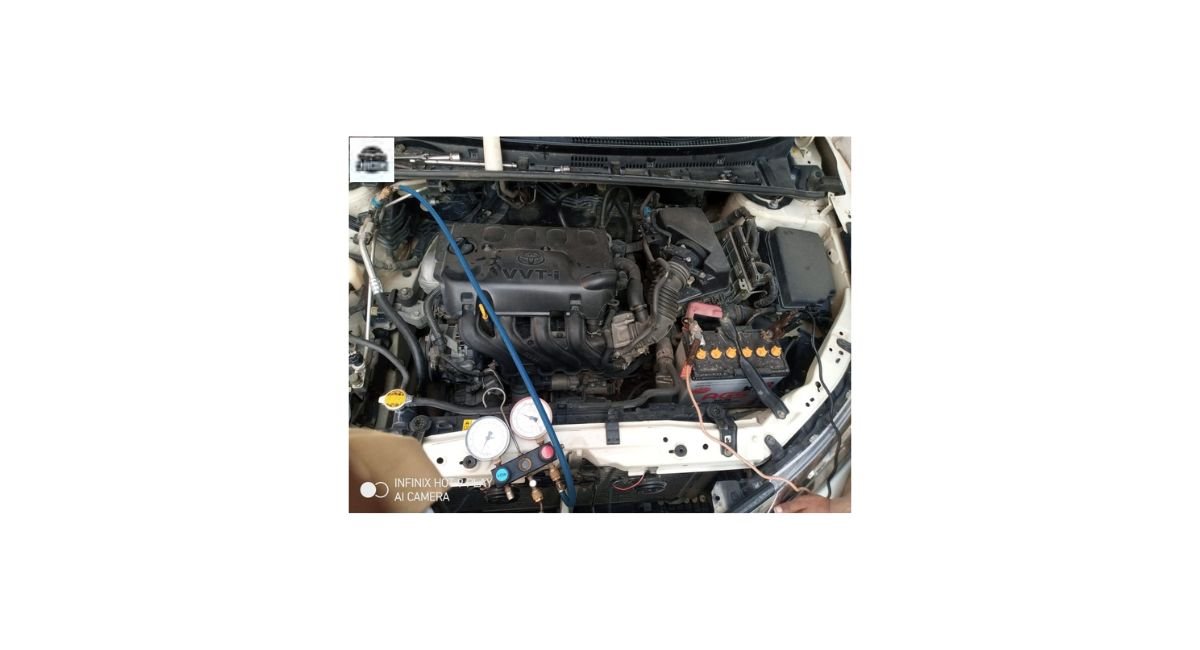
When a car owner tells me their AC keeps acting strange on a hot day, I always start by checking how the air and conditioning respond when they press the control button or move the dial to MAX air. Many drivers expect cold air, but it may suddenly run out, making them wondering if the refrigerant needs a recharge. Sometimes the AC blows full blast again, and the whole cycle feels almost crazy, like the vehicle is possessed by evil spirits. In reality, the system may be short-cycling because the ambient temperature sensor, AC compressor, or serpentine belt that powers the system has a hidden issue.
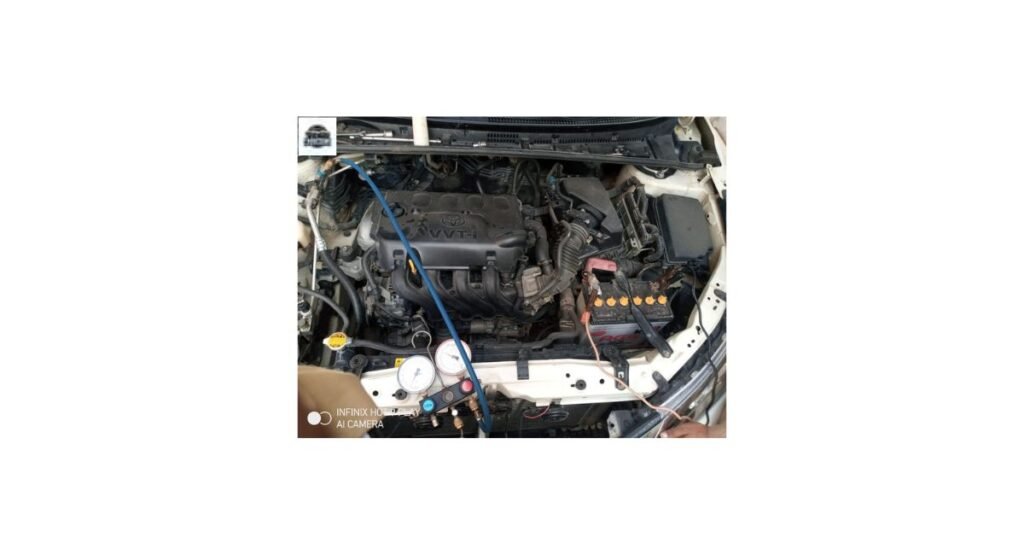
From my experience, this type of problem can make the AC frequently and even randomly turn on and turn off, especially when a small electrical issue is causing the disruption. I’ve watched drivers sweat through their shirt while trying to stay ready for the cool air to return, only to feel frustrated again. The worst part is that the repair bill becomes larger the longer you leave the issue unchecked. That’s why I encourage car owners to stop guessing and get the system inspected quickly.
Once you pop the hood and look closer at the air conditioning components, the real reason usually shows itself. Sometimes it’s minor, and drivers sign in relief knowing it wasn’t a costly failure. Other times, the source of trouble is deeper, but catching it early saves money and prevents bigger headaches later on.
Possible Reasons Your Car AC keeps turning On and Off
Underlying Causes in More Detail
When I check a malfunctioning AC system, I always try to understand the hidden issues that make a car AC keep cycling on and off, and I often have to delve deeper into the system to see how these common faults develop; in many cases, an underlying weakness in a component causes the problem that can lead to bigger failures if ignored, so taking a closer look always helps me find a better direction for repair.
Low Refrigerant Level
In a well-functioning car aircon system, the compressor and evaporator create a pressure differential that moves the refrigerant through the system. When the refrigerant is low, the pressure differential is disturbed, which can make the system malfunction. This may cause the compressor to intermittently turn off as it struggles to maintain the necessary pressure, leading to intermittent cooling and often serving as an indication of refrigerant leakage.
This is not an issue to dismiss, because neglect can make it severe and even cause permanent damage to car aircon system components. Professional services can ensure the refrigerant level is just right, keeping your AC running efficiently and preventing repeated interruptions.
Faulty Thermostat
Sometimes the faulty thermostat can be the hidden cause of your car AC problems. The thermostat senses the temperature of the refrigerant, and if it’s not in optimal condition, it may misjudge the reading, sending improper signals to the compressor. This often makes the AC cycle on and cycle off, creating an inconsistent cooling experience. From my experience, even small issues with the thermostat can disrupt the AC’s performance, so checking it early can save larger repairs later.
Clogged Orifice Tubes
A clogged orifice tube in your car aircon system, which is part of the liquid line, can disrupt the refrigerant flow in the system. This faulty operation often causes the compressor to keep cycling on and cycling off, making your AC inconsistent. From my experience, a prompt cleaning or replacing of the orifice tube can quickly resolve the problem and restore smooth cooling.
Issues with the Compressor Clutch
The compressor clutch in your car AC controls the compressor, deciding when it should engage or disengage. When functioning correctly, it works continuously in a rhythmic cycle, but excessive cycling can signal an issue. Sometimes it may fail to generate enough pressure due to wearing down or breaking mechanically, making a possible Vehicle Air Conditioning repair necessary to restore proper cooling and prevent further AC problems.
Coil Freeze-Ups Due to a Clogged Cabin Air Filter
A clogged cabin air filter that has been filthy or blocked up for too long can cause a freeze-up in the AC lines behind the dash, which may make the system turn off after some time. You might notice that the air from the vents isn’t as vigorous as it used to be. The cabin air filter is usually located behind the glove box, and to reach it and other interior components of your car air conditioning system, you may need to uninstall the filter. If you aren’t sure where it is, check your owner’s manual or repair manual for your specific make and model.
Pull out the filter and give it a proper cleaning. Tap it to remove any physical debris, and use a few gentle blasts of canned or compressed air. If it’s heavily blocked, a replacement may be needed. Keep in mind that frozen lines can also happen if moisture enters through a line or component leak. If your air conditioning system keeps turning on and off randomly even after cleaning, check refrigerant levels and inspect for leaks, just like discussed earlier.
Troubles with a Bad Compressor Relay
A bad compressor relay can make your air conditioning system behave unpredictably. The air conditioning compressor has a relay and a magnetic clutch that engages when you turn the system on. Sometimes it will turn on briefly with a screeching or whining noise and then disengage, making the system turn off again. To check if this is the culprit, try a simple eyes and ears test: pop the hood, stand at the front of the car with the engine running, and have someone activate the car’s AC system. You should hear a click or buzz when the compressor clutch engages.
If the compressor clutch does not turn on, or it whines, buzzes, or clicks off within a minute or two, the clutch may be dead, causing your air conditioning system to turn on and off. Also, it’s important to check the relay or fuse in the engine bay fuse box, as a burned out component will prevent the AC from working. Sometimes, the problem could be with the AC high-pressure switch or AC low-pressure switch, which can prevent the air conditioning system from running normally.
Car AC Keeps Turning On and Off – High & Low-Pressure Switch Issues
A failing high-pressure switch or low-pressure switch can often be the culprit when your car AC system starts to turn on and turn off randomly. These sensors are designed to monitor the pressure and state of the refrigerant as it moves through the high and lower-pressure sides of your air conditioning system. Both the high-side pressure switch and low-side pressure switch act as safety devices and will disengage if a problem arises, helping to prevent damaging the compressor or other system components.
Sometimes, if you recharge the AC refrigerant without testing the level, or juiced it up recklessly, an overly high-pressure condition in the lines can risk damaging the compressor, causing the high-pressure switch to shut the system down. Similarly, a leak in the refrigerant lines or a partial clog in the system, such as in the condenser, can cause the low-pressure switch to disengage, allowing the air conditioning to run for a few minutes before shutting down when the sensor detects an intolerable level.
To keep your AC compressor working properly, ensure both switches are closed to complete the electrical circuit. If either the low-pressure switch or high-pressure switch is open, it won’t complete the circuit, and without the necessary power, the AC compressor’s clutch won’t kick on, leading to repeated cycling of your car AC system. Paying attention to these switches can save you from more severe repairs and protect your air conditioning system.
Checking High- or Low-Pressure Switches
One practical way to test the high-pressure switch and low-pressure switch in your car’s air conditioning system is a simple bush-fix using a piece of wire. By carefully bypassing the switch in the electrical connections, you are forcing it to close and complete the circuit, which helps you see if the AC compressor clutch engages properly when the system is turned on. Start with the high-pressure switch by inserting the wire; if the system turns off or the AC compressor clutch disengages, the assumption is that the low-pressure switch is failing. Repeat the process for the low-pressure switch to confirm which switch is the problem.
If the system runs normally after bypassing a switch, it points to a leak or excess refrigerant pumped accidentally in the system. In that case, you’ll need to bleed the excess refrigerant or locate the leak to restore smooth operation. This approach allows you to diagnose the issue without dismantling major air conditioning system components, giving you a hands-on way to fix a system that keeps turning on and off unexpectedly.
Radiator Blockage Causing AC Auto Shut-Off
Although the radiator is not a direct part of the air-conditioning system, it plays an important supporting role in keeping your Car AC running smoothly. This is why many drivers — and even some technicians — overlook it when dealing with AC tripping or auto shut-off problems.
In most vehicles, the AC condenser is installed directly in front of the radiator. The condenser must release heat efficiently for the refrigerant to cool down and circulate properly. However, when the radiator becomes blocked or choked with dirt, dust, mud, leaves, insects, or road debris, overall airflow is reduced. Poor airflow prevents both the condenser and radiator from cooling effectively.
As a result, refrigerant pressure rises rapidly inside the AC system. When pressure exceeds safe operating limits, the vehicle’s safety system automatically switches the compressor off to protect it from damage. Once pressure drops slightly, the compressor kicks back on, causing the AC to repeatedly turn on and off — a condition commonly known as AC short cycling or tripping.
In modern vehicles, this issue becomes even more noticeable. Newer cars are equipped with engine temperature sensors connected to the vehicle’s computer system (ECU). If the engine temperature increases even slightly beyond normal range, the ECU may immediately shut off the AC compressor to reduce engine load and prevent overheating. So even a partially blocked radiator — which may not yet cause obvious overheating — can still trigger the AC to turn off automatically.
This means the problem might appear to be an AC fault, when in reality the root cause lies in the cooling system.
—
Signs That a Blocked Radiator Is Causing Your AC to Turn Off
AC works for a few minutes then shuts off
Cooling performance is weak or inconsistent
Engine temperature gauge rises unexpectedly
Radiator fan is running constantly at high speed
Hot air or reduced cooling at low vehicle speeds
Faulty Thermostat Valve Causing Engine Overheating & AC Tripping
Another important reason your car AC may start switching on and off due to engine overheating — besides a clogged radiator — is a faulty thermostat valve.
Modern engines use a thermostat valve to regulate coolant circulation. This valve opens and closes at specific temperature levels to control how much coolant flows through the engine and radiator. When the engine is cold, the thermostat stays mostly closed to help the engine warm up quickly. As the temperature rises, the valve gradually opens to allow full coolant circulation, keeping engine temperatures stable.
However, problems occur when the thermostat becomes stuck partially closed or fails to open fully. In this situation, coolant cannot circulate properly even though the engine temperature is rising. As a result:
Heat builds up inside the engine
The temperature gauge begins to climb
Cooling efficiency drops significantly
In modern cars equipped with ECU (computer-controlled systems), even a slight increase above the safe operating temperature triggers protective measures. One of the first actions taken by the ECU is to automatically shut off the AC compressor. This reduces engine load and helps prevent further overheating — but it also causes the AC to trip repeatedly, turning on and off in short cycles.
Unfortunately, many inexperienced or careless mechanics fail to identify this underlying issue. Instead of diagnosing engine cooling problems properly, they often focus only on the AC system and recommend unnecessary repairs such as gas refills, compressor replacements, or sensor changes. This leads to wasted money, while the real problem — the stuck thermostat valve — remains unresolved, keeping the AC tripping problem exactly the same.
—
Signs of a Faulty Thermostat Valve
AC turns off when the temperature gauge rises
Engine warms up too quickly or overheats randomly
Cool air turns weak during traffic or idling
Heater performance becomes inconsistent
Coolant flow feels restricted in hoses
—
Correct Solution
If your car AC keeps turning on and off along with signs of overheating, the thermostat valve must be:
Tested for proper opening temperature
Replaced if it is stuck or moving slowly
Installed with fresh coolant and system bleeding
A simple thermostat replacement can often solve repeated overheating and AC tripping issues without touching the AC system itself — saving both time and money.
—
Final Advice
Before spending heavily on unnecessary AC repairs, always ensure your vehicle’s cooling system components — especially the thermostat valve — are thoroughly inspected by a qualified technician.
To avoid incorrect diagnoses and financial loss caused by inexperienced mechanics, make sure you visit CarAcGuro first whenever you face AC or overheating problems. Getting a proper inspection early can protect both your car and your budget.
People also ask
How do I stop my AC from short cycling?
Short cycling (the unit turning on and off too quickly) is usually caused by overheating, incorrect refrigerant charge, a faulty thermostat, poor airflow (dirty filters or blocked condenser), or electrical issues (bad contactor/relay). To stop it: check and replace dirty filters, clear debris from the outdoor condenser, verify the thermostat settings and placement, have refrigerant pressure checked and corrected, and inspect contactors/relays. If the unit is oversized for the space or the compressor is failing, replacement or professional repair may be needed.
—
Why does my AC keep clicking on and off?
Clicking usually means the compressor clutch or relay is engaging and then quickly disengaging. Common causes are low refrigerant (pressure switches open), a failing compressor clutch, a bad relay/contactor, or a pressure switch that’s tripping. Listen for a distinct click when you turn the AC on — if it repeatedly clicks and the compressor won’t stay engaged, test the relay and pressure switches and check system pressures with gauges. Electrical faults and worn clutch components are frequent culprits.
—
Why does my AC come on and then shut off?
That behavior is a symptom, not a single fault. Typical reasons: the thermostat thinks the set temperature is reached (or is misreading), high/low pressure safety switches are opening, the compressor is overheating, or the cooling system (condenser/radiator/thermostat in cars) is not dissipating heat properly. In cars, engine-temperature protections can also force the AC off to reduce load. Check thermostat behavior, measure refrigerant pressures, and inspect cooling airflow and sensors.
—
Is it normal for an AC compressor to kick on and off?
Yes — some cycling is normal: compressors cycle to maintain set temperature and prevent evaporator freeze-up. However, normal cycles last several minutes; rapid on/off cycling (seconds to a minute) is abnormal and stresses the system. If the compressor frequently cycles in short bursts, diagnose for refrigerant, airflow, thermostat, or electrical issues.
—
Why does my car AC compressor cycle on and off every 10 seconds?
A 10-second on/off cycle is not normal. Common causes specific to vehicles include very low refrigerant (causing pressure switches to trip), a clogged orifice/expansion device, stuck thermostat or radiator airflow problem triggering ECU protections, or a failing compressor clutch/relay. Use manifold gauges to check high/low side pressures and watch whether the ECU is cutting the compressor because of engine temperature. Quick cycling risks compressor damage, so have it checked promptly.
—
Why is my AC compressor on and off frequently?
Frequent cycling generally points to: incorrect refrigerant charge (low or over-charged), blocked airflow (dirty coils/filters, blocked condenser), failing electrical components (relays, capacitors), defective pressure switches, or a failing compressor. In vehicles, added causes include engine cooling faults (clogged radiator or thermostat problems) which cause the ECU to disable the compressor. Fix the root cause — don’t just recharge refrigerant repeatedly — because repeated cycling shortens compressor life.